
Tiny House Movement

I am intrigued by tiny houses and the intent to live more sustainably. Looking back at all the places I’ve lived, it was those places that were small that provided me the best quality of life. Downsizing to live tiny takes effort but the rewards can be worth it.

What is a tiny house?

In the realm of innovative housing alternatives, the concept of a tiny house has captured imaginations and redefined the way we perceive living spaces.

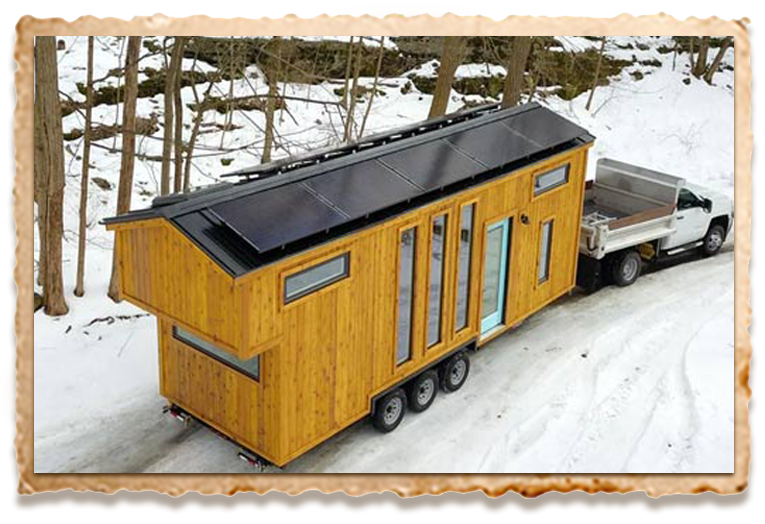
Timbercraft Tiny Homes

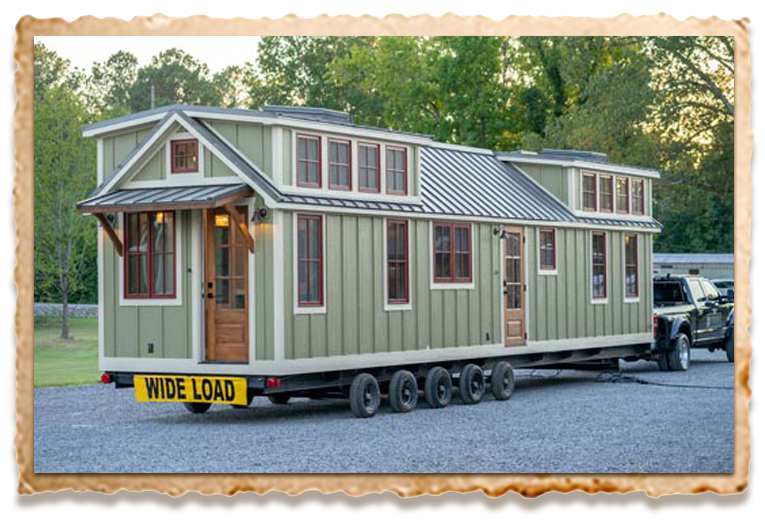
Denali XL by Timbercraft Tiny Homes
A tiny house, characterized by its diminutive dimensions and cleverly designed layout, has no clear definition, and encompasses a diverse array of dwellings that challenge traditional housing norms. Tiny houses can be stationary or mobile. Those that are stationary don’t have size limitations; however, houses that are mobile must be less than 500 square feet and no wider than 11 feet to comply with state and federal highway restrictions. Tiny houses can include manufactured homes, which before 1976 were labeled as mobile homes.
From the charming mobility of a tiny house on wheels and the efficient elegance of micro-apartments, to the rustic allure of little cabins tucked away in nature, these living spaces epitomize the art of maximizing limited square footage. While encompassing a spectrum of creative structures-such as converted shipping containers, treehouses, and Earthships-tiny homes share a common thread: an emphasis on efficient design, minimalism, and the embrace of sustainable living.

Tiny home evolution

The tiny house movement draws inspiration from an age-old human inclination towards efficient and thoughtful dwelling arrangements, echoing the ingenious layouts of ancient civilizations that thrived within the confines of compact homes. While our ancestors instinctively understood the value of optimizing space, it is in the modern era, particularly in the early 2000s, that the resurgence of tiny house living gained momentum. This rebirth was instigated by a convergence of compelling factors, chief among them being a recession and housing market crash. More recently, its popularity has been driven by soaring home prices. It is also a cultural backlash to consumerism and living in oversized “mcmansions” that don’t respect the planet and practice sustainability.

Timbercraft Tiny Homes

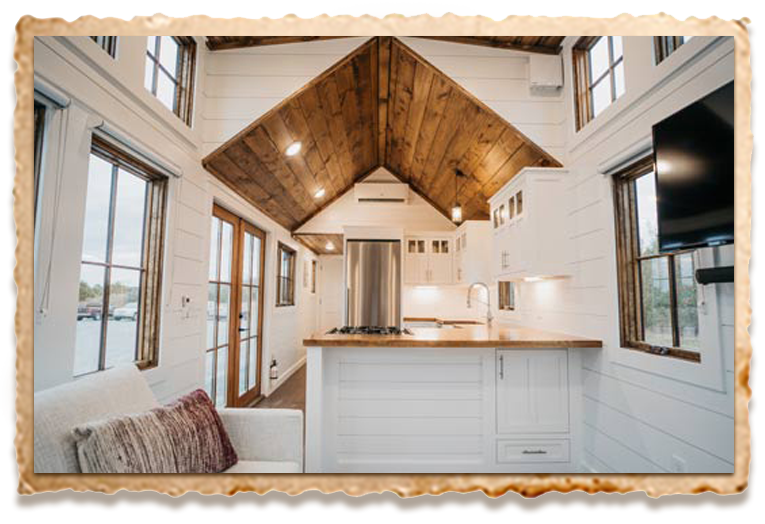
Interior, Denali XL by Timbercraft Tiny Homes
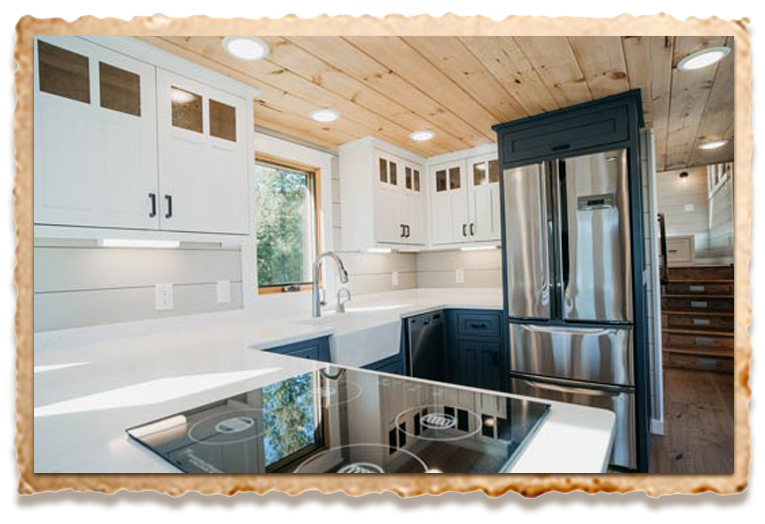
Timbercraft Tiny Homes

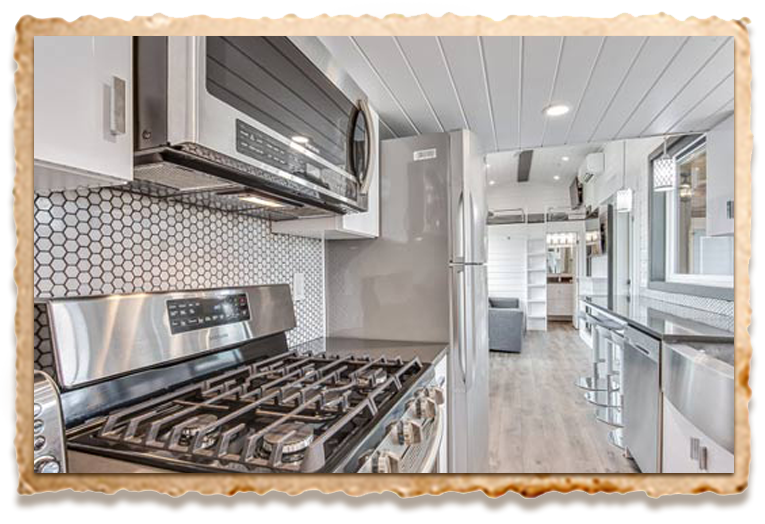
Kitchen, Denali XL by Timbercraft Tiny Homes
‘Tiny houses are not a new thing. But this trend of downsizing and portable homes continues to grow in recent years. The tipping point that spiraled its growth was the economic downturn in 2008 which led to a housing market crash and foreclosures.” – Cubicoon, July 7, 2021.

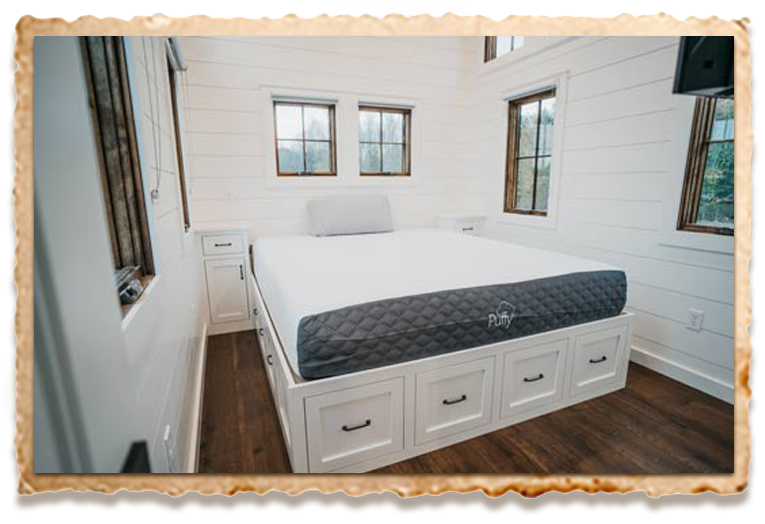
Timbercraft Tiny Homes

Bedroom, Denali XL by Timbercraft Tiny Homes
Prior to the 2008 economic recession, Susan Susank’s 1998 book ”The Not So Big House” inspired architects, designers, and homeowners with the idea that homes could be better living spaces if they focused on quality instead of size. Later, in 2002, John Shafer popularized tiny homes with the design of a tiny house and guide.
As urbanization encroached upon available space and property prices soared, an alternative approach to living emerged as an appealing solution, one that embraced frugality without compromising comfort. Amidst the growing desire for a more unrestrained existence, the tiny house movement has emerged as a beacon of simplicity and financial liberation. Travis Pike of Wind River Tiny Homes noted, “For my wife and me, living in our tiny home for several years was a steppingstone; most people aren’t deciding to live in a tiny home for the rest of their lives. This is the beauty of tiny homes and downsizing, it can be a reset for those looking to get their feet back under them and find freedom they have been desperately searching for, or a launching point that helps get them on the right path to achieve their dreams.”

Timbercraft Tiny Homes

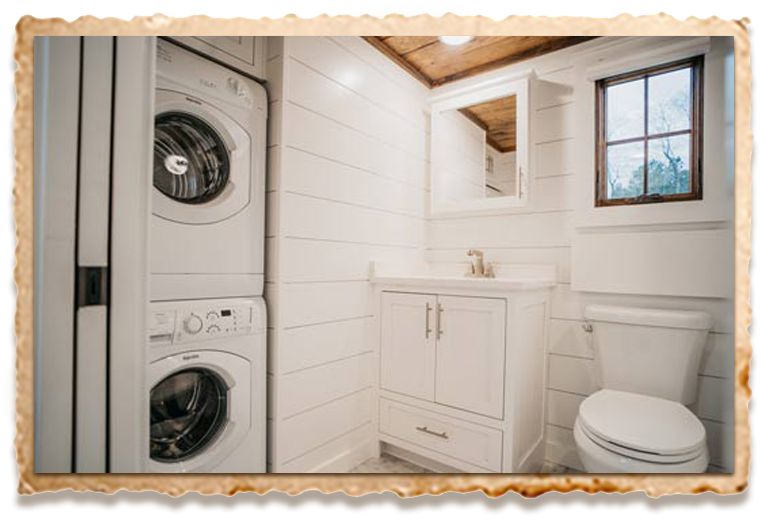
Bathroom, Denali XL by Timbercraft Tiny Homes
“It was this project which freed me from the rent trap, allowed me to live with more freedom, less debt and which lead to the creation of a job that I love in the form of my web series Living Big in a Tiny House.” – Bryce Langston on his first tiny home project

Custom Container Living

Container home interior by Custom Container Living

Willowbee Tiny Homes

Off-Grid Ark by Willowbee Tiny Homes

Learn More

Benefits of tiny home living

This sentiment underscores the multifaceted appeal of tiny house living. Many individuals view these diminutive dwellings not as lifelong commitments, but a means towards financial freedom and a more intentional way of life. By minimizing mortgage obligations and shedding unnecessary possessions, tiny house enthusiasts often find themselves unburdened by the constraints of modern living. This newfound financial freedom paves the way for pursuing passions, exploring new avenues, and dedicating time and resources to other experiences. The allure of the tiny house movement lies in its ability to be almost whatever the homeowners want it to be. Tiny home advocates also cite the ease and low cost of maintenance as benefits, while those living in mobile tiny homes add flexibility in location, moving with their house.

Environmental Sustainability

Beyond its financial advantages, the allure of tiny house living extends to sustainability. The minimalist principle inherent in tiny homes encourages mindful consumption, curbing the excesses of a consumer-driven society. With their smaller size, tiny houses require less land and fewer resources to build and maintain, resulting in reduced material waste and a lower carbon footprint. Tiny homes built with recycled materials, like shipping containers, have an even smaller carbon footprint and environmental impact.
Moreover, the emphasis on downsizing often leads to a simplified lifestyle, fostering a greater connection to nature and a reduced reliance on resource-intensive amenities. Many tiny house enthusiasts adopt renewable energy sources, like solar panels and composting toilets, to further minimize their impact on the planet. By embracing the principles of tiny house living, individuals not only liberate themselves from the burden of excess, but also contribute to a more sustainable future. The sustainability component of tiny house living has attracted people who want to live off-grid and be independent. Employing sustainable practices like solar energy and composting makes tiny houses perfect for remote locations that lack traditional utilities.
Challenges of Tiny Home living
Although it seems like it is difficult to find anyone who lives in a tiny house that doesn’t espouse its benefits, tiny house living, with all its charm, does come with considerable challenges. These include personal and lifestyle adjustments to community integration and navigating local building and development codes. Tiny house living is a lifestyle. The cozy confines of tiny houses can sometimes feel a bit too snug, challenging everything from personal space to storage needs.

Sharing such close quarters can test even the strongest of relationships. Everyone living in the tiny house has to want to live a more minimalist lifestyle in order to create a harmonious living environment. Living with less is a great destination but a difficult journey. It is very easy to bring bags of goods home but much more challenging to rid your space of them later. For those accustomed to having lots of “stuff,” adjusting to a more minimalist existence may require some deep soul-searching. Moving is one of the most stressful life experiences. Combining that with having to downsize your living space by up to 90% can sometimes push a relationship to the breaking point.

In design terms, because tiny houses lack dedicated rooms, such as an office, spaces need to be multipurpose to accommodate work, play, and kids and pets if they are in the picture. Tiny home architects and designers are rising to the challenge and creating some very efficient spaces for simple living.

The actual process of building and placing a tiny house can be daunting. Regulations governing tiny houses are only just beginning to take foot and vary by state and local jurisdiction. In many municipalities, zoning departments don’t know how to categorize or regulate them. It is usually much easier to build a remote tiny house than to try integrating one into an established single family home community.
As natural resources and land become more scarce, we as a society will need to pivot to more sustainable living. Tiny houses embody some of the practices that will in short order become the norm. Though tiny home living presents considerable challenges to the uninitiated, it promises to teach us valuable lessons about living more sustainably, and further outside the culture of mass consumerism, leading us to a way of living with less of an impact on our planet!

Tiny House Movement

I am intrigued by tiny houses and the intent to live more sustainably. Looking back at all the places I’ve lived, it was those places that were small that provided me the best quality of life. Downsizing to live tiny takes effort but the rewards can be worth it.

What is a tiny house?

In the realm of innovative housing alternatives, the concept of a tiny house has captured imaginations and redefined the way we perceive living spaces.

Timbercraft Tiny Homes

Denali XL by Timbercraft Tiny Homes
A tiny house, characterized by its diminutive dimensions and cleverly designed layout, has no clear definition, and encompasses a diverse array of dwellings that challenge traditional housing norms. Tiny houses can be stationary or mobile. Those that are stationary don’t have size limitations; however, houses that are mobile must be less than 500 square feet and no wider than 11 feet to comply with state and federal highway restrictions. Tiny houses can include manufactured homes, which before 1976 were labeled as mobile homes.
From the charming mobility of a tiny house on wheels and the efficient elegance of micro-apartments, to the rustic allure of little cabins tucked away in nature, these living spaces epitomize the art of maximizing limited square footage. While encompassing a spectrum of creative structures-such as converted shipping containers, treehouses, and Earthships-tiny homes share a common thread: an emphasis on efficient design, minimalism, and the embrace of sustainable living.

Tiny home evolution

The tiny house movement draws inspiration from an age-old human inclination towards efficient and thoughtful dwelling arrangements, echoing the ingenious layouts of ancient civilizations that thrived within the confines of compact homes. While our ancestors instinctively understood the value of optimizing space, it is in the modern era, particularly in the early 2000s, that the resurgence of tiny house living gained momentum. This rebirth was instigated by a convergence of compelling factors, chief among them being a recession and housing market crash. More recently, its popularity has been driven by soaring home prices. It is also a cultural backlash to consumerism and living in oversized “mcmansions” that don’t respect the planet and practice sustainability.

Timbercraft Tiny Homes

Interior, Denali XL by Timbercraft Tiny Homes

Timbercraft Tiny Homes

Kitchen, Denali XL by Timbercraft Tiny Homes
‘Tiny houses are not a new thing. But this trend of downsizing and portable homes continues to grow in recent years. The tipping point that spiraled its growth was the economic downturn in 2008 which led to a housing market crash and foreclosures.” – Cubicoon, July 7, 2021.

Timbercraft Tiny Homes

Bedroom, Denali XL by Timbercraft Tiny Homes
Prior to the 2008 economic recession, Susan Susank’s 1998 book ”The Not So Big House” inspired architects, designers, and homeowners with the idea that homes could be better living spaces if they focused on quality instead of size. Later, in 2002, John Shafer popularized tiny homes with the design of a tiny house and guide.
As urbanization encroached upon available space and property prices soared, an alternative approach to living emerged as an appealing solution, one that embraced frugality without compromising comfort. Amidst the growing desire for a more unrestrained existence, the tiny house movement has emerged as a beacon of simplicity and financial liberation. Travis Pike of Wind River Tiny Homes noted, “For my wife and me, living in our tiny home for several years was a steppingstone; most people aren’t deciding to live in a tiny home for the rest of their lives. This is the beauty of tiny homes and downsizing, it can be a reset for those looking to get their feet back under them and find freedom they have been desperately searching for, or a launching point that helps get them on the right path to achieve their dreams.”

Timbercraft Tiny Homes

Bathroom, Denali XL by Timbercraft Tiny Homes
“It was this project which freed me from the rent trap, allowed me to live with more freedom, less debt and which lead to the creation of a job that I love in the form of my web series Living Big in a Tiny House.” – Bryce Langston on his first tiny home project

Custom Container Living

Container home interior by Custom Container Living

Willowbee Tiny Homes

Off-Grid Ark by Willowbee Tiny Homes

Learn More

Benefits of tiny home living

This sentiment underscores the multifaceted appeal of tiny house living. Many individuals view these diminutive dwellings not as lifelong commitments, but a means towards financial freedom and a more intentional way of life. By minimizing mortgage obligations and shedding unnecessary possessions, tiny house enthusiasts often find themselves unburdened by the constraints of modern living. This newfound financial freedom paves the way for pursuing passions, exploring new avenues, and dedicating time and resources to other experiences. The allure of the tiny house movement lies in its ability to be almost whatever the homeowners want it to be. Tiny home advocates also cite the ease and low cost of maintenance as benefits, while those living in mobile tiny homes add flexibility in location, moving with their house.

Environmental Sustainability

Beyond its financial advantages, the allure of tiny house living extends to sustainability. The minimalist principle inherent in tiny homes encourages mindful consumption, curbing the excesses of a consumer-driven society. With their smaller size, tiny houses require less land and fewer resources to build and maintain, resulting in reduced material waste and a lower carbon footprint. Tiny homes built with recycled materials, like shipping containers, have an even smaller carbon footprint and environmental impact.
Moreover, the emphasis on downsizing often leads to a simplified lifestyle, fostering a greater connection to nature and a reduced reliance on resource-intensive amenities. Many tiny house enthusiasts adopt renewable energy sources, like solar panels and composting toilets, to further minimize their impact on the planet. By embracing the principles of tiny house living, individuals not only liberate themselves from the burden of excess, but also contribute to a more sustainable future. The sustainability component of tiny house living has attracted people who want to live off-grid and be independent. Employing sustainable practices like solar energy and composting makes tiny houses perfect for remote locations that lack traditional utilities.
Challenges of Tiny Home living
Although it seems like it is difficult to find anyone who lives in a tiny house that doesn’t espouse its benefits, tiny house living, with all its charm, does come with considerable challenges. These include personal and lifestyle adjustments to community integration and navigating local building and development codes. Tiny house living is a lifestyle. The cozy confines of tiny houses can sometimes feel a bit too snug, challenging everything from personal space to storage needs.

Sharing such close quarters can test even the strongest of relationships. Everyone living in the tiny house has to want to live a more minimalist lifestyle in order to create a harmonious living environment. Living with less is a great destination but a difficult journey. It is very easy to bring bags of goods home but much more challenging to rid your space of them later. For those accustomed to having lots of “stuff,” adjusting to a more minimalist existence may require some deep soul-searching. Moving is one of the most stressful life experiences. Combining that with having to downsize your living space by up to 90% can sometimes push a relationship to the breaking point.

In design terms, because tiny houses lack dedicated rooms, such as an office, spaces need to be multipurpose to accommodate work, play, and kids and pets if they are in the picture. Tiny home architects and designers are rising to the challenge and creating some very efficient spaces for simple living.

The actual process of building and placing a tiny house can be daunting. Regulations governing tiny houses are only just beginning to take foot and vary by state and local jurisdiction. In many municipalities, zoning departments don’t know how to categorize or regulate them. It is usually much easier to build a remote tiny house than to try integrating one into an established single family home community.
As natural resources and land become more scarce, we as a society will need to pivot to more sustainable living. Tiny houses embody some of the practices that will in short order become the norm. Though tiny home living presents considerable challenges to the uninitiated, it promises to teach us valuable lessons about living more sustainably, and further outside the culture of mass consumerism, leading us to a way of living with less of an impact on our planet!