
A Life Lesson Learned
By Ron Albright
I was born at home, off the grid, in the foothills of the Great Smokey Mountains – the most diverse natural environment in the new world. Growing up, we depended on nature for food and shelter and learned early on to love and respect it. My father was Cherokee, and he knew how to feed his family with fresh food every day. Each season brought different varieties of food. He and mother nature were very good teachers from whom I learned many life lessons. One of the most profound was when I was about 7 years old.
Credit: Ron Albright
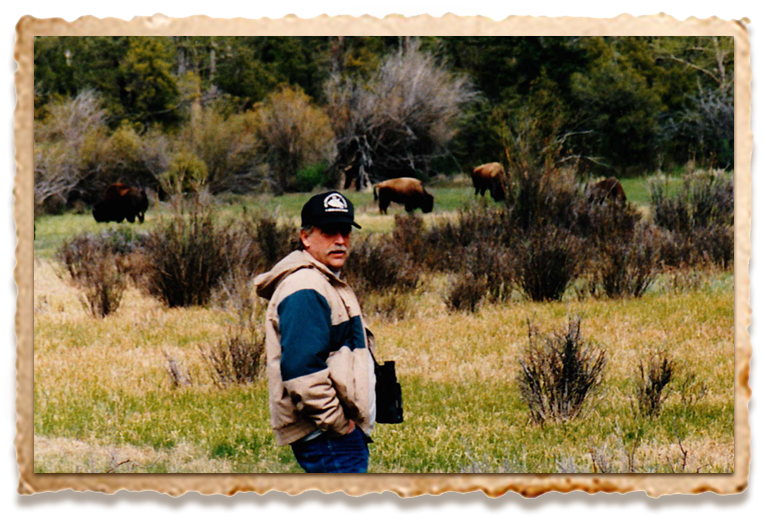
I met Ron through his lovely wife, Barbara, who was a gardener at Walt Disney World and assisted with my nature shows. Now retired, they live on a little piece of heaven nestled in woods teaming with wildlife. I love visiting them. Sitting on their porch, time slows down and you can feel the rhythm of nature. Hear your own heart beat. Ron and I share a special affinity for crows and he helped me raise a very special crow called Caw Caw.
Credit: iStock Carol Hamilton
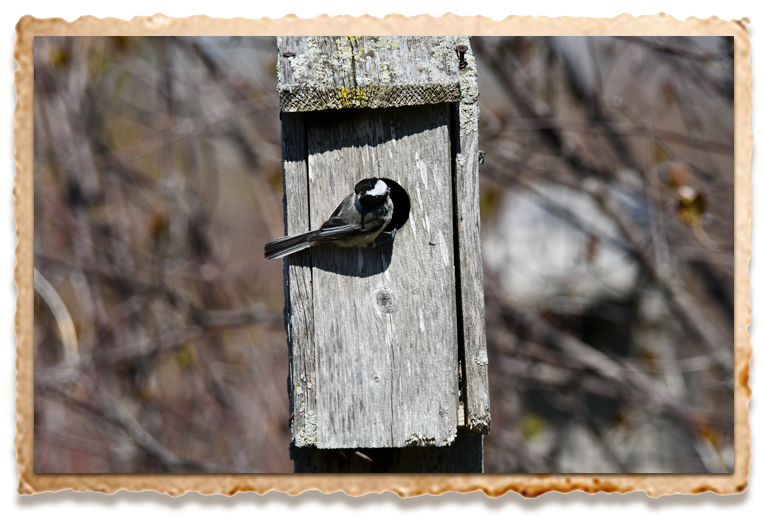
Black-capped Chickadee (Poecile atricapillus)
My father taught me at a very young age how to shoot a gun. “Never point it at anything you do not want to kill,.” he said. The first time he took me squirrel hunting, we found a log I could use as a seat. He left me there with a .22 rifle and told me where he would go, and not to not shoot in that direction. I settled in and waited. I thought, “What a powerful tool. You just point it at something far away and pull the trigger, and it sends a piece of lead streaking through the air, and you get food!”
I looked over the rifle to see if it was “zeroed in” right. Little did I know nature was about to teach a seven year old boy a lesson that would change his life. As I sat there, a black- capped chickadee landed nearby – a very curious little bird that got too close. I aimed and shot him. Sometime a while after, a squirrel came by, and I shot him.
My father returned with the squirrels he had hunted. He said, “I heard two shots. Did you get both of them?” Feeling unsettled about shooting a little bird, I said, “I got one squirrel, and was checking the gun out and shot a bird.” I showed him the chickadee. He said, “You know what you have to do, don’t you?” I said, “What?” “Two things,” he said:, “first, you have to eat it for supper, then you have to go tell its babies why it’s not coming home tonight.”
With a very heavy heart, I ate the bird for supper that night. The thought of its babies starving to death because I shot it wouldn’t stop running through my mind. I never came up with a good reason to explain to its family why it never came home.
From that time forward, I was on a mission of repentance and found a way to ease the loss I caused. I began building bird houses. I studied all the hole-nesting birds in the area. Some like smaller holes, some like larger, some deep, some shallow. The only way to learn this is by watching them in the wild. My father said, “You can’t learn much by watching a bird in a cage.” The biggest danger to holenesting birds are snakes. You must keep that in mind when you install a nest box. If a snake can find a way in, the family will die in the middle of the night.
Making amends for the impulsive act I made in my youth, I have hand-made hundreds of bird houses over the years, and placed them in areas where I have lived, and given many away. With each one I hope I have helped a new family of little birds take flight. I still think of that young boy sitting on the log, and that little chickadee, and what a valuable life lesson I learned.
Credit: Don's Nature Notes
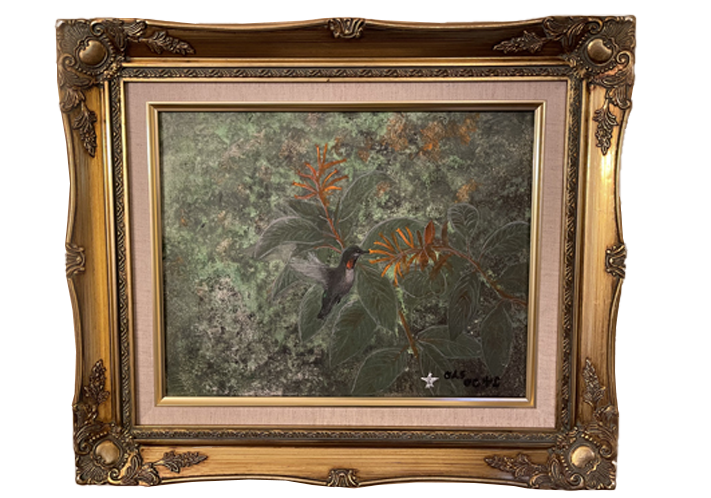
Ron is an accomplished artist and gifted me this beautiful oil painting of a Ruby-throated Hummingbird in a firebush!