

Jadav Payeng

The Forest Man of India

It was a personal honor and privilege to interview Jadav “Molai” Payeng – known worldwide as the Forest Man of India.  Mr. Payeng’s story is remarkable and truly inspiring. Over a period of 40 years, beginning when he was a young man and continuing to this day, he planted one tree at a time—transforming a once-barren island in India into a lush forest. Today, his forest spans over 1400 acres—almost double the size of New York’s Central Park, and still growing—and is teeming with wildlife!
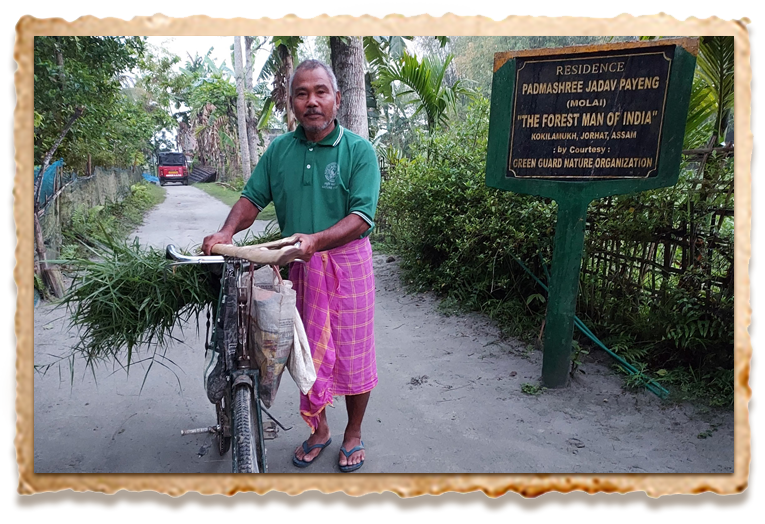
Credit: Rituraj Phukan

Jadav Payeng, The Forest Man of India
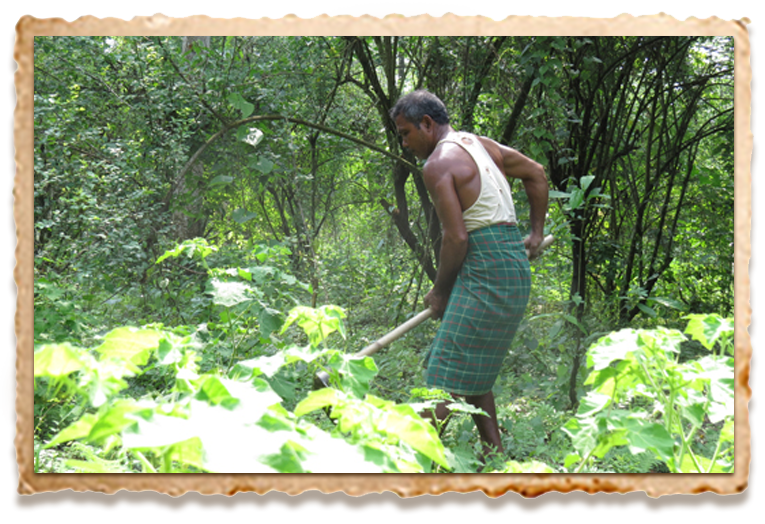
Credit: Rituraj Phukan

Jadav Payeng tending to the Molai Forest

Jadav Payeng’s Molai Forest

Majuli island began as a sandbar in the Brahmaputra River near Jorhat in the Indian state of Assam. In 1979, when Jadav Payeng was a young man, torrential floods swept animals and vegetation from upstream onto the sandbar. Jadav watched in despair as the animals and plants died from heat exposure because there were no shade trees to provide protection from the sun.

The disheartening scene inspired Jadav to take action; under the guidance of his Mising tribal elders, he began a lifelong undertaking of planting a forest tree by tree. Over the course of the last 40 years, Jadav Payeng’s Forest has grown to over twice the size of New York’s Central Park! The Molai forest, as it has been named in Jadav’s honor, now provides habitat to elephants, Indian rhinoceros, deer, monkeys, birds, and Bengal tigers.
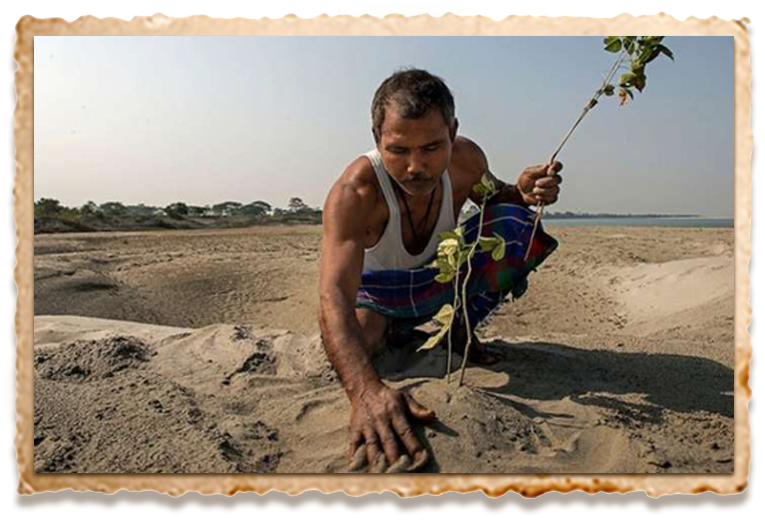
Credit: Rituraj Phukan

Jadav Payeng, planting a forest tree by tree.

“You plant one or two trees, and they have to seed. And once they seed, the wind knows how to plant them, the birds here know how to sow them, cows know, elephants know, even the Brahmaputra River knows.”
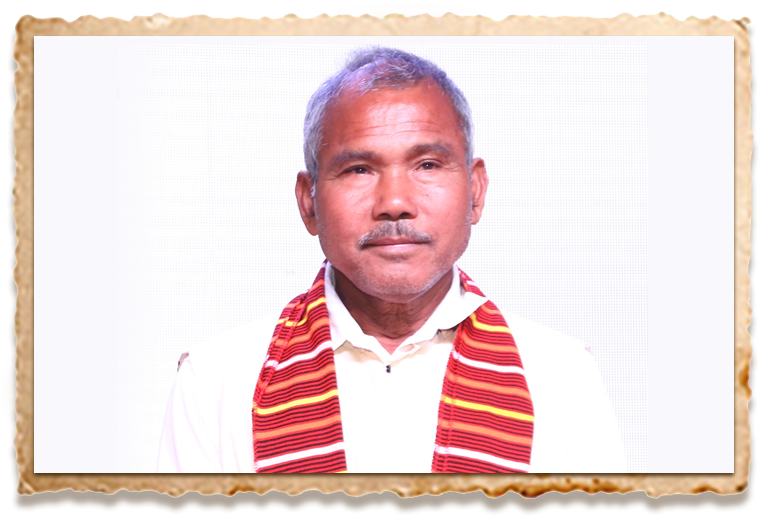
Credit: Rituraj Phukan

Jadev Payeng

Credit: Rituraj Phukan

President of India, Bharat Ratna Pranah Mukherjee, conferring the Padmashree Award (India’s highest civilian honor) on Jadav Payeng.

Our Interview

Did you always have a nature connection? If so, what do you attribute it to?

I belong to the Mising community, and we are known as river people. Our lives are dependent on the abundance of nature around us. We procure our food and medicines from the forests around us; our health, immunity, and livelihoods are connected to nature. I always say that our parents brought us into this world, but let us live and learn from nature. For me, nature is my classroom, my source of sustenance, and my God.

Was there a specific experience in nature, with an animal, or in your childhood, that influenced or changed you or your life path?

Once when I was very young, I saw hundreds of snakes that had washed up dead on the barren sandbank. It had a deep impact on me, and I was convinced that they would have survived if there was vegetation. I realized our livestock, the source of sustenance for my family, could meet a similar fate in times of drought.

That is when I decided to plant trees. On the advice of some village elders, I planted bamboo and other saplings, carried seeds everywhere I went, and worked on greening small areas every day.

“I see God in nature. Nature is God. It gives me inspiration. It gives me power … As long as it survives, I survive.”

What was your intention when you planted the first trees in what would become Molai Forest?

My intention was to green small areas of the barren sandbar so that all animals would have a place to take shelter during the hot summer days. Those days, it was mostly the livestock, and I never thought wild animals will inhabit these areas.

Did you think it would evolve and have the impact, both ecologically and motivationally, that it has?

I continued to plant every day, taking seeds, saplings, and cuttings of different species as per the season, on the advice of village elders and some forest officers. I also carried ants and termites to the sandbar, hoping that they would survive and live there, but never imagined the forest to grow to this extent.

When the trees started to flower and fruits started to ripen, the birds came to feed. They started dispersing seeds, and helped the forest to evolve. Other animals like deer and elephants came to take shelter and helped the forest to grow, as they are also like gardeners.
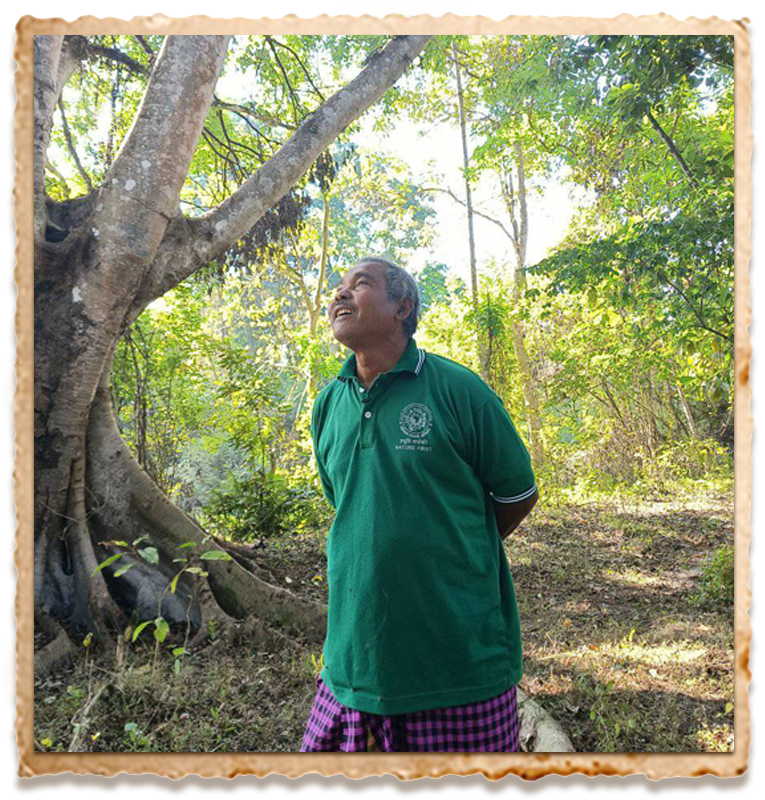
Credit: Rituraj Phukan

Jadav Payeng under one of his trees in the Molai Forest
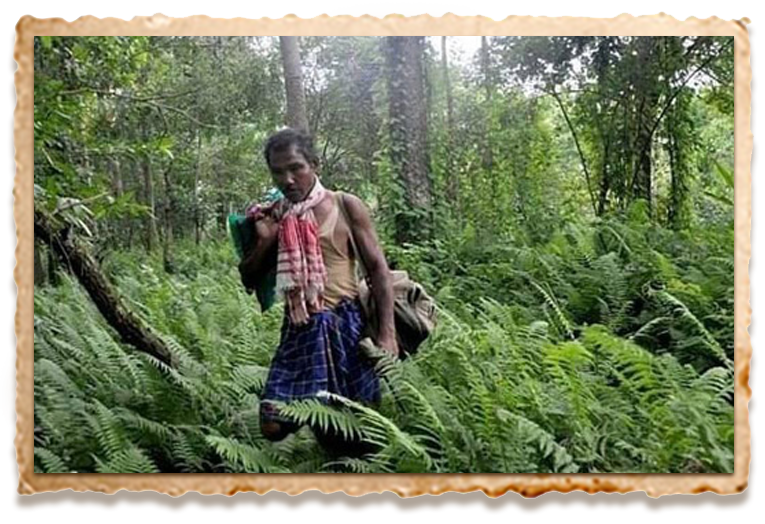
Credit: Rituraj Phukan

Jadav Payeng as a younger man in the Molai Forest

What is the status of Molai Forest today? Do you continue your work there?

Molaikathoni has now grown into a dense forest inhabited by mammals, birds, reptiles, and other smaller species. Royal Bengal Tigers, Asiatic Elephants, Greater One-horned Rhinoceros, and Water Buffalo are seen here regularly. Endangered vultures are among hundreds of birds, both resident and migratory, that have been recorded here.

The forest has almost all of the medicinal plants and trees found in the region. There are many species of fruit and flowering trees, all native and some endemic to the region. Several types of grasses are also found around the forest.

It is now recognized as my creation, and I am duty-bound to work there and plant trees as long as I can. I am there in the forest before dawn every day unless I am traveling.

Your work saving nature has been recognized globally and has inspired many to take action. How has this recognition influenced your mission?

I am happy that people are inspired by my work, particularly now, when there is so much happening with climate change and biodiversity loss. People are talking about restoring nature and rewilding places, and I feel very satisfied to have created an example for others to emulate. We owe it to our future generations to leave behind a livable planet, which can only be accomplished by allowing mother nature to recover and flourish.
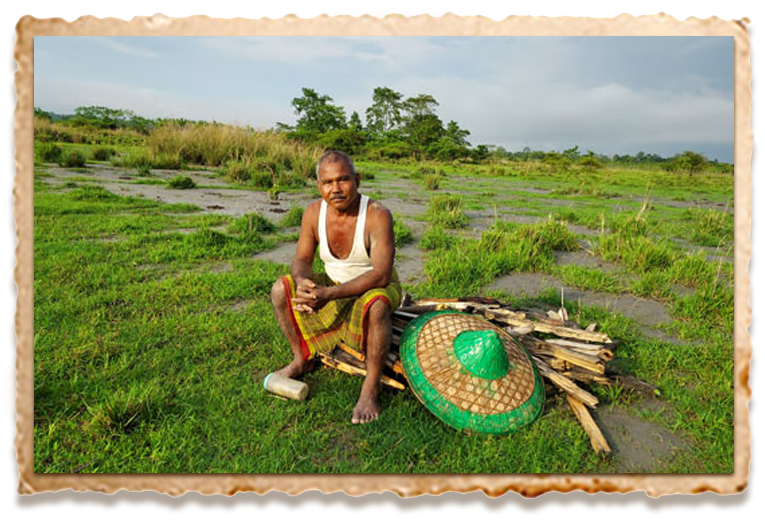
Credit: Rituraj Phukan

Jadav Payeng

I never imagined my work would be recognized this way. For 30 years, no one knew about my forest, and there were no visitors or recognition. But in the last 10-12 years, thousands of people have visited my forest, and hundreds of documentaries and even films have been made. I got the opportunity to travel abroad and speak at prestigious events in India and other countries all because of my forest. I am grateful to Mother Nature for these opportunities.

What does the current chapter of your life look like?

When I am home, I wake up before sunrise, cycle to my boat, and row across the river to the island. After another walk pushing my cycle or riding it over around 8-10 kilometers, I reach my forest. I spend the day planting seeds and saplings of the season, and tending to the trees, my small vegetable farm, and my livestock. Many days I have visitors from all over the world, and I show them my forest and tell them my story.

I had a good time during the lockdown as I was able to spend all my time in the forest, although sometimes we had webinars and zoom calls.

Almost half of my days are spent traveling to various schools, colleges, and events where I am invited to speak, mostly in Assam and around India, but also in some other countries like France, Taiwan, Bangladesh, Mexico, and UAE.

“People want to know my story. I tell them I just plant trees, and I’d like all of you to do so. Trees are the lifeline of the forest. They don’t just give us shade and oxygen. They feed birds and animals and balance our ecosystem. If there is no life left, what is the use of all the advancements we have made?”

Do you have other projects underway that you would like to share?

My lifetime project is to plant trees (and more trees!) and to inspire future generations. Therefore, I never deny any invitation to speak, as it is an opportunity to mobilize more people to contribute to the healing of our ailing planet and help nature recover.

How can people best effect change?

I only know how to work on the ground, plant trees, and grow food for my family. Now that is seen as inspirational, and I am called a changemaker. I feel that one should do what he feels like, follow the heart, and give it everything. As they say, be the change the world needs to see.

Is there a message you would like to share?

I am blessed to have this opportunity to reach out to readers in faraway lands, places where I have never been. I must thank all the readers for their love and recognition, and hope that someday all of you will come to visit my forest. Our Mising community shares an unbreakable bond with the natural world, and I invite you all to come and experience it yourselves.

What action would you like people to take?

Everyone should plant one sapling for each member of their family and promise to nurture it for the next one year. Spend the day in nature, watching the birds and animals, making friends with the neighborhood forests, and rediscovering nature. Let us all promise to be one with nature, for our children, for all life on Earth, and for the wellbeing of future generations to come.

When future generations learn of your work what would you like them to remember?

Nature has no favorites: everybody gets the opportunity to contribute to a greener, better planet. Each one of us can contribute toward changing our part of the world for the better, and together we can change the world.

What gives you hope for the future?

I see the children of today taking leadership of the environmental movement. I see the youth go out to nature, learning about the trees, watching birds and butterflies. I see the world is in better hands, and that gives me the greatest hope for the future.

For more information or to donate to Mr. Payeng’s cause please visit:

Jadav Payeng

The Forest Man of India

It was a personal honor and privilege to interview Jadav “Molai” Payeng – known worldwide as the Forest Man of India.  Mr. Payeng’s story is remarkable and truly inspiring. Over a period of 40 years, beginning when he was a young man and continuing to this day, he planted one tree at a time—transforming a once-barren island in India into a lush forest. Today, his forest spans over 1400 acres—almost double the size of New York’s Central Park, and still growing—and is teeming with wildlife!

Credit: Rituraj Phukan

Jadav Payeng, The Forest Man of India

Credit: Rituraj Phukan

Jadav Payeng tending to the Molai Forest

Jadav Payeng’s Molai Forest

Majuli island began as a sandbar in the Brahmaputra River near Jorhat in the Indian state of Assam. In 1979, when Jadav Payeng was a young man, torrential floods swept animals and vegetation from upstream onto the sandbar. Jadav watched in despair as the animals and plants died from heat exposure because there were no shade trees to provide protection from the sun.

The disheartening scene inspired Jadav to take action; under the guidance of his Mising tribal elders, he began a lifelong undertaking of planting a forest tree by tree. Over the course of the last 40 years, Jadav Payeng’s Forest has grown to over twice the size of New York’s Central Park! The Molai forest, as it has been named in Jadav’s honor, now provides habitat to elephants, Indian rhinoceros, deer, monkeys, birds, and Bengal tigers.

Credit: Rituraj Phukan

Jadav Payeng, planting a forest tree by tree.

“You plant one or two trees, and they have to seed. And once they seed, the wind knows how to plant them, the birds here know how to sow them, cows know, elephants know, even the Brahmaputra River knows.”

Credit: Rituraj Phukan

Jadev Payeng

Credit: Rituraj Phukan

President of India, Bharat Ratna Pranah Mukherjee, conferring the Padmashree Award (India’s highest civilian honor) on Jadav Payeng.

Our Interview

Did you always have a nature connection? If so, what do you attribute it to?

I belong to the Mising community, and we are known as river people. Our lives are dependent on the abundance of nature around us. We procure our food and medicines from the forests around us; our health, immunity, and livelihoods are connected to nature. I always say that our parents brought us into this world, but let us live and learn from nature. For me, nature is my classroom, my source of sustenance, and my God.

Was there a specific experience in nature, with an animal, or in your childhood, that influenced or changed you or your life path?

Once when I was very young, I saw hundreds of snakes that had washed up dead on the barren sandbank. It had a deep impact on me, and I was convinced that they would have survived if there was vegetation. I realized our livestock, the source of sustenance for my family, could meet a similar fate in times of drought.

That is when I decided to plant trees. On the advice of some village elders, I planted bamboo and other saplings, carried seeds everywhere I went, and worked on greening small areas every day.

“I see God in nature. Nature is God. It gives me inspiration. It gives me power … As long as it survives, I survive.”

What was your intention when you planted the first trees in what would become Molai Forest?

My intention was to green small areas of the barren sandbar so that all animals would have a place to take shelter during the hot summer days. Those days, it was mostly the livestock, and I never thought wild animals will inhabit these areas.

Did you think it would evolve and have the impact, both ecologically and motivationally, that it has?

I continued to plant every day, taking seeds, saplings, and cuttings of different species as per the season, on the advice of village elders and some forest officers. I also carried ants and termites to the sandbar, hoping that they would survive and live there, but never imagined the forest to grow to this extent.

When the trees started to flower and fruits started to ripen, the birds came to feed. They started dispersing seeds, and helped the forest to evolve. Other animals like deer and elephants came to take shelter and helped the forest to grow, as they are also like gardeners.

Credit: Rituraj Phukan

Jadav Payeng under one of his trees in the Molai Forest

Credit: Rituraj Phukan

Jadav Payeng as a younger man in the Molai Forest

What is the status of Molai Forest today? Do you continue your work there?

Molaikathoni has now grown into a dense forest inhabited by mammals, birds, reptiles, and other smaller species. Royal Bengal Tigers, Asiatic Elephants, Greater One-horned Rhinoceros, and Water Buffalo are seen here regularly. Endangered vultures are among hundreds of birds, both resident and migratory, that have been recorded here.

The forest has almost all of the medicinal plants and trees found in the region. There are many species of fruit and flowering trees, all native and some endemic to the region. Several types of grasses are also found around the forest.

It is now recognized as my creation, and I am duty-bound to work there and plant trees as long as I can. I am there in the forest before dawn every day unless I am traveling.

Your work saving nature has been recognized globally and has inspired many to take action. How has this recognition influenced your mission?

I am happy that people are inspired by my work, particularly now, when there is so much happening with climate change and biodiversity loss. People are talking about restoring nature and rewilding places, and I feel very satisfied to have created an example for others to emulate. We owe it to our future generations to leave behind a livable planet, which can only be accomplished by allowing mother nature to recover and flourish.

Credit: Rituraj Phukan

Jadav Payeng

I never imagined my work would be recognized this way. For 30 years, no one knew about my forest, and there were no visitors or recognition. But in the last 10-12 years, thousands of people have visited my forest, and hundreds of documentaries and even films have been made. I got the opportunity to travel abroad and speak at prestigious events in India and other countries all because of my forest. I am grateful to Mother Nature for these opportunities.

What does the current chapter of your life look like?

When I am home, I wake up before sunrise, cycle to my boat, and row across the river to the island. After another walk pushing my cycle or riding it over around 8-10 kilometers, I reach my forest. I spend the day planting seeds and saplings of the season, and tending to the trees, my small vegetable farm, and my livestock. Many days I have visitors from all over the world, and I show them my forest and tell them my story.

I had a good time during the lockdown as I was able to spend all my time in the forest, although sometimes we had webinars and zoom calls.

Almost half of my days are spent traveling to various schools, colleges, and events where I am invited to speak, mostly in Assam and around India, but also in some other countries like France, Taiwan, Bangladesh, Mexico, and UAE.

“People want to know my story. I tell them I just plant trees, and I’d like all of you to do so. Trees are the lifeline of the forest. They don’t just give us shade and oxygen. They feed birds and animals and balance our ecosystem. If there is no life left, what is the use of all the advancements we have made?”

Do you have other projects underway that you would like to share?

My lifetime project is to plant trees (and more trees!) and to inspire future generations. Therefore, I never deny any invitation to speak, as it is an opportunity to mobilize more people to contribute to the healing of our ailing planet and help nature recover.

How can people best effect change?

I only know how to work on the ground, plant trees, and grow food for my family. Now that is seen as inspirational, and I am called a changemaker. I feel that one should do what he feels like, follow the heart, and give it everything. As they say, be the change the world needs to see.

Is there a message you would like to share?

I am blessed to have this opportunity to reach out to readers in faraway lands, places where I have never been. I must thank all the readers for their love and recognition, and hope that someday all of you will come to visit my forest. Our Mising community shares an unbreakable bond with the natural world, and I invite you all to come and experience it yourselves.

What action would you like people to take?

Everyone should plant one sapling for each member of their family and promise to nurture it for the next one year. Spend the day in nature, watching the birds and animals, making friends with the neighborhood forests, and rediscovering nature. Let us all promise to be one with nature, for our children, for all life on Earth, and for the wellbeing of future generations to come.

When future generations learn of your work what would you like them to remember?

Nature has no favorites: everybody gets the opportunity to contribute to a greener, better planet. Each one of us can contribute toward changing our part of the world for the better, and together we can change the world.

What gives you hope for the future?

I see the children of today taking leadership of the environmental movement. I see the youth go out to nature, learning about the trees, watching birds and butterflies. I see the world is in better hands, and that gives me the greatest hope for the future.

For more information or to donate to Mr. Payeng’s cause please visit: