

Summers by the River with Grandmother Emma
By Chip Taylor
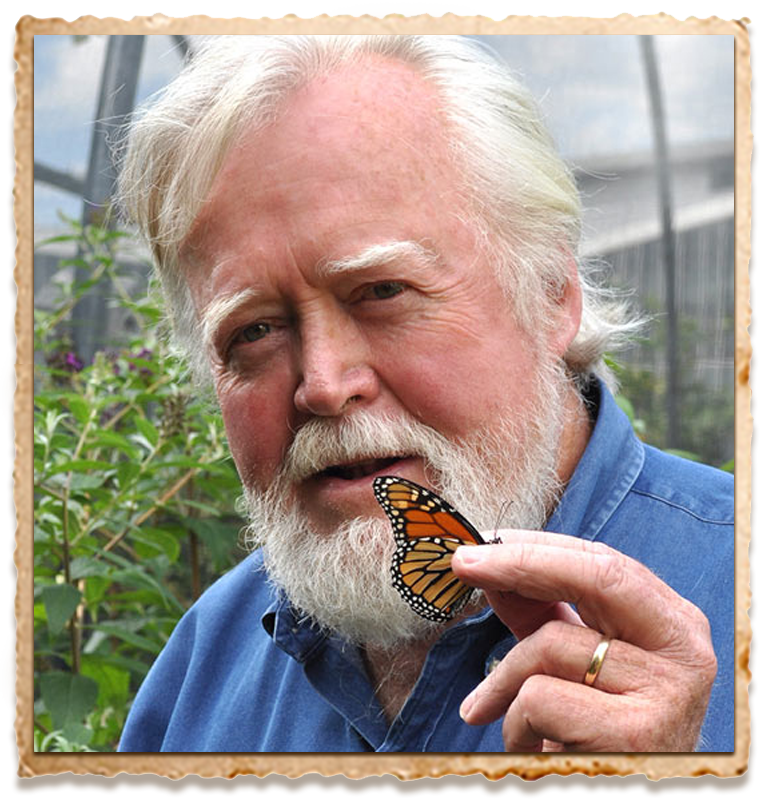
Credit: Chip Taylor
Chip Taylor, Founder and Director of Monarch Watch and Profenor of Ecology and Evolutionary Biology at the Univenity of Kansas
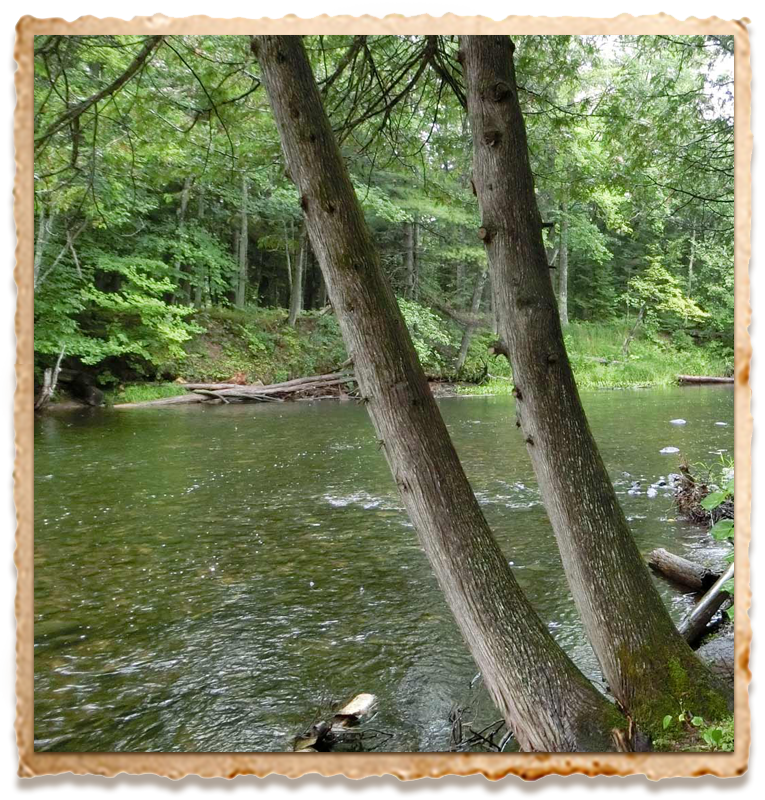
Credit: Broni Likomanov
Peshtigo River, Crivitz, Wl.
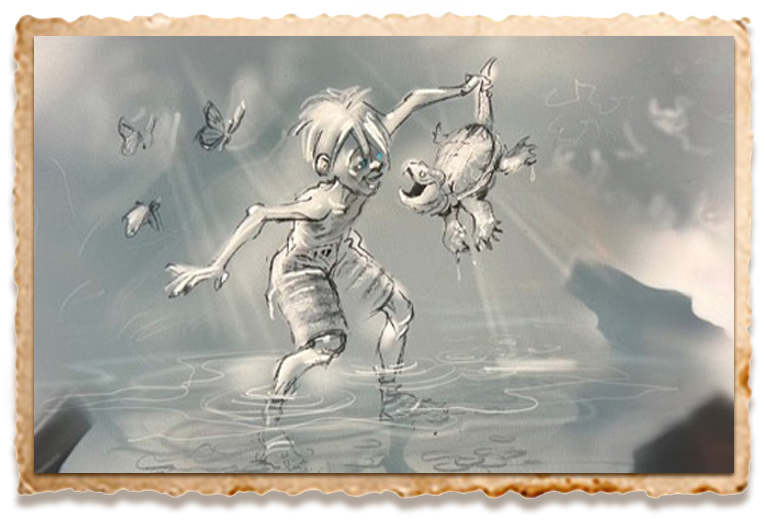
Credit: Broni Likomanov
7 year-old “Little Chippy” with 10 lb. snapping turtle. Peshtigo River, Crivitz, Wl.1944 )
I’ve seen it several times over the years but can’t find it now: it’s a picture of me, a smiling, skinny seven-year-old in a bathing suit. I’ve always wondered about that photo; I was proudly holding a ten pound snapping turtle by the tail as high as I could. How did I know how to catch and hold a snapping turtle at age seven?
I remember being told as a child that if you were bitten by a snapping turtle, it wouldn’t let go until sundown, even if you cut off its head. I had no idea whether or not that was true, but the lesson was clear: stay away from the head. The tail was a good handle, as the snapper couldn’t reach around to bite you. Applying that lesson to other wildlife-even porcupines-also seemed to work well for me. I became something of a barehanded porcupine catcher. I learned all this and discovered my nature connection when I spent summers with my grandmother, Emma Wasmund, at her 80-acre property near Crivitz, Wisconsin.
The three summers I spent with my grandmother and my cousins were formative. Grandmother was a special person. She embodied nature, and at some time in her life had acquired an amazing amount of lore about the natural world. At six to eight years old, I wasn’t able to distinguish between lore and knowledge, but I was fascinated. Grandmother was undoubtedly the source of the snapper advice. She also told me that if you were able to pick up a skunk by the tail, it wouldn’t spray you-nearly two decades later, I found baby skunks in an alfalfa field while doing field work outside of Dodge City, Kansas. The first skunk I picked up didn’t spray. The second didn’t get the memo, leading to a desperate search for a source of tomato juice. I guess I can give her credit for being correct half the time.
The three summers I spent with my grandmother and my cousins were formative. Grandmother was a special person. She embodied nature, and at some time in her life had acquired an amazing amount of lore about the natural world. At six to eight years old, I wasn’t able to distinguish between lore and knowledge, but I was fascinated. Grandmother was undoubtedly the source of the snapper advice. She also told me that if you were able to pick up a skunk by the tail, it wouldn’t spray you-nearly two decades later, I found baby skunks in an alfalfa field while doing field work outside of Dodge City, Kansas. The first skunk I picked up didn’t spray. The second didn’t get the memo, leading to a desperate search for a source of tomato juice. I guess I can give her credit for being correct half the time.
Another bit of wisdom involved snakes. She related that if you killed a snake during mating season, the grieving mate would find its way to you at night to get its revenge. I remembered that when I was fifteen. While wandering on a neighbor’s property late in the spring, I came across the biggest snake I had ever seen. I was a hunter and collector of sorts at that point in my life, so I killed it. It was while I was skinning the snake (a 5’5″ bullsnake) that I remembered what my grandmother had said. What if she was right? My brother and I were staying in a cabin with no plumbing, and we had to get up at night to relieve ourselves outdoors. What if the snake’s mate was nearby? I decided to return to the site where the snake was found, and unbelievably, the mate was there. She met the same fate as her suitor. I didn’t want to worry about stepping outdoors in the middle of the night!
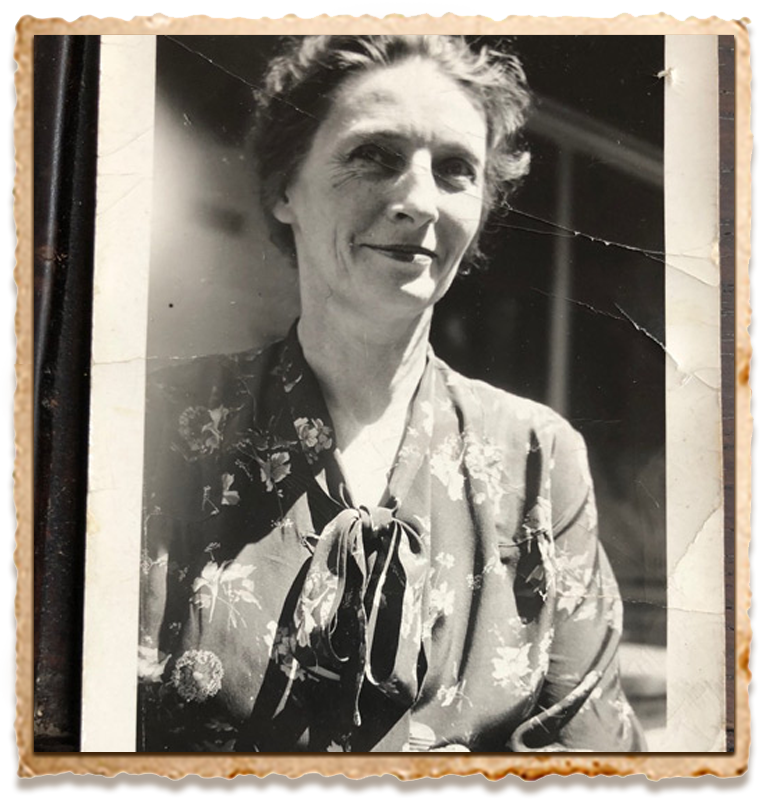
Credit: Chip Taylor
Emma Wasmund 1892 -1959
“This river of life called to me, and it connected me to many rivers later in life: the St. Croix, the Mississippi, the Kansas, the Kenai, the East River in Colorado, and the Verdigris in Kansas.”
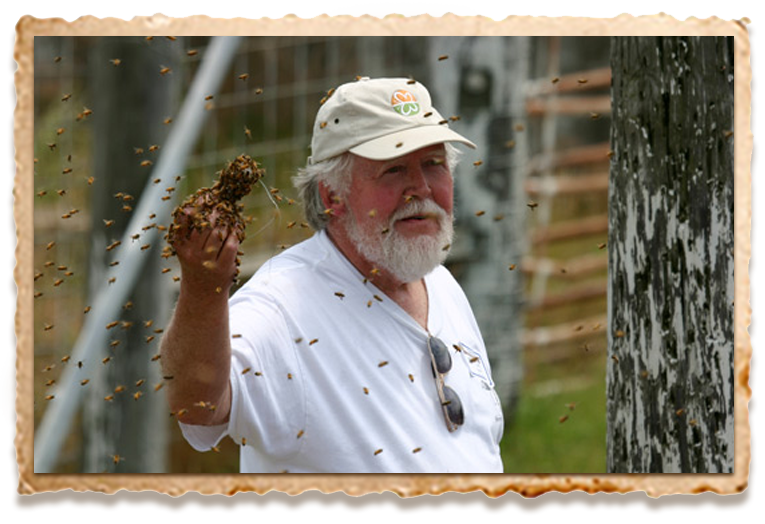
Credit: Chip Taylor
Teaching honeybee swarming biology at Northeast Kansas Beekeepers Fun Days
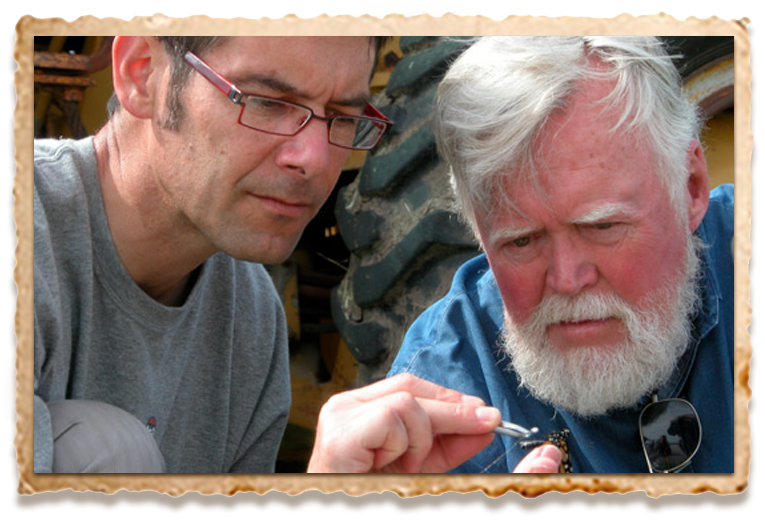
Credit: Chip Taylor
Martin Wikelski and Chip Taylor applying radio tag to monarch known as “Big Boy” to track migration
I learned what lived under which rocks in that river. The mudpuppies were few and were only found under large rocks with a cavity on the downriver side. Certain mussels could be found wedged between small stones, while others preferred sandy bottoms. The crayfish with their claws and egg masses glued to the underside of the abdomen were fascinating in their unique ability to move backwards.
I never found any Native American artifacts in the river, but there are surely some. Grandmother’s property had been a campground for woodland tribes hundreds of years in the past, before Europeans arrived and before metal was widely used. There were burial mounds on the property, and arrowheads were regularly found when nearby fields were plowed. Some of the artifacts found on the property made it to a museum in Chicago.
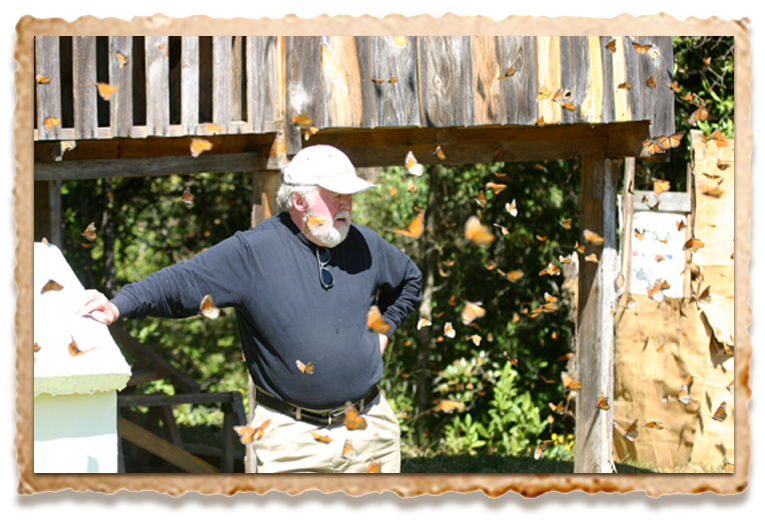
Credit: Chip Taylor
Chip Taylor and Monarch Watch
Thanks, Grandmother.

For more information about Chip Taylor and his work, visit Monarch Watch.